

Commercial Solar Installations
Cut your business energy costs by up to 70% with a commercial solar PV system. We design and install rooftop, ground-mount, and carport systems from 25kW to 500kW+ for businesses, farms, schools, and commercial properties within 35 miles of Hemsworth. Every quote includes a full ROI analysis and payback projection.
50kW+
systems installed
0% VAT
qualifying systems
~5yr
commercial payback
NICEIC Approved
Electrical Safety
Tesla Certified
Powerwall Installer
RECC Member
Consumer Code
5-Star Reviews
Google Verified
See Our Commercial Work
We document every major commercial installation. Watch our team at work — from roof surveys and structural assessments through to final commissioning and handover.
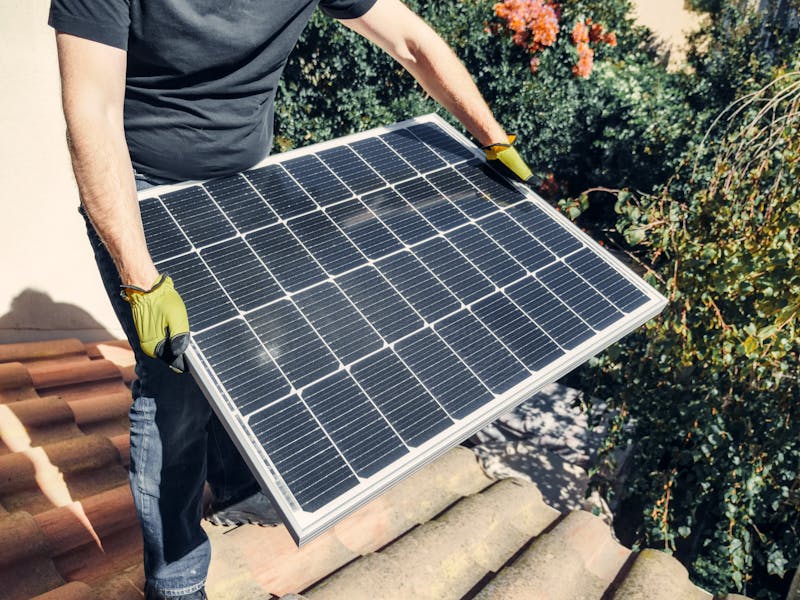
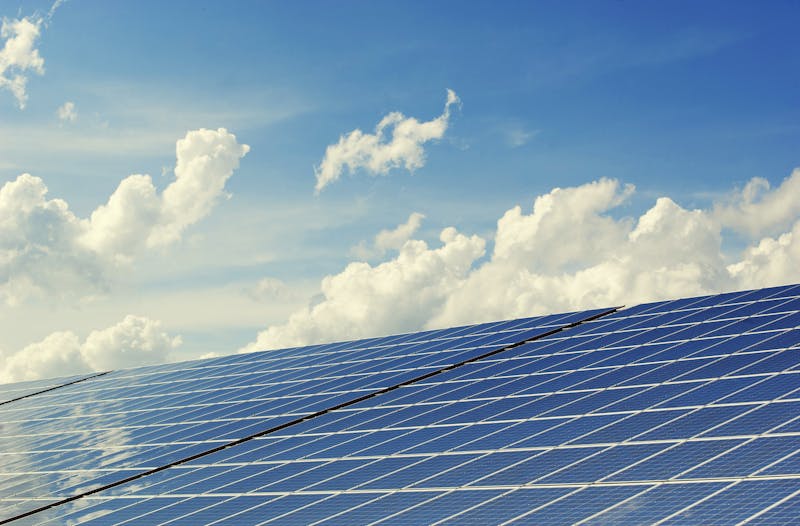
Full project videos available on our Instagram and Facebook channels. More commercial case studies added regularly.
What Size System Do You Need?
We design every system around your actual consumption data, not guesswork. Below are typical figures based on current commercial electricity rates. Your site survey will produce exact projections.
| System Size | Suited For | Annual Generation | Payback Period |
|---|---|---|---|
| 25–50 kW | Small warehouse, office, farm outbuilding | 22,500–45,000 kWh | 3–5 years |
| 50–100 kWMost Common | Medium factory, school, logistics unit | 45,000–90,000 kWh | 3–4 years |
| 100–500 kW+ | Large manufacturing, distribution, farm | 90,000–450,000 kWh | 2–4 years |
Estimates based on commercial electricity rates, Yorkshire solar irradiance, and typical self-consumption rates. DESNZ put the average non-domestic electricity price at 24.51p/kWh including the Climate Change Levy in quarter 2 2026, though it varies by consumption band — we model against your own contracted rate rather than an average. Actual figures provided in your written quote.
Benefits for Your Business
Commercial solar is one of the most effective ways to reduce business operating costs, improve sustainability credentials, and protect against volatile energy prices. With commercial electricity rates significantly higher than domestic, the financial case for business solar is even stronger than residential.
Reduce Operating Costs by Up to 70%
Commercial electricity rates are higher than domestic. A well-sized solar system can eliminate the majority of your daytime electricity consumption, delivering immediate savings from the first day of operation. Many businesses see substantial annual energy bill reductions depending on system size and consumption patterns.
Capital Allowances & Tax Relief
Businesses can claim capital allowances on solar panel installations, offsetting the cost against taxable profits. The Annual Investment Allowance allows businesses to deduct the full cost of qualifying plant and machinery — including solar PV — from profits in the year of purchase.
ESG & Sustainability Credentials
Solar panels deliver tangible, measurable environmental benefits that strengthen your ESG reporting. Display your commitment to sustainability to customers, investors, and stakeholders. Many supply chain contracts now require demonstrable environmental action.
Protection Against Energy Price Rises
Electricity generated by your own solar panels costs nothing once the system is paid for. By generating a significant portion of your electricity on-site, you insulate your business against future energy price increases and the volatility that has characterised UK energy markets.
We Only Install Tier-One Equipment
We don't install budget panels or cheap inverters to win on price. Every commercial system uses tier-one solar panels (Aiko Neostar, DMEG TopCon, Jinko Tiger Neo) paired with commercial-grade SolarEdge or string inverters, and optional battery storage from Tesla, Alpha ESS, or SigenEnergy.
Solar Panels
Aiko Neostar 3S, DMEG TopCon N-Type, Jinko Tiger Neo
Tier-1 rated. 25–30-year performance warranty.
Inverters
SolarEdge HD-Wave, commercial string inverters
Full monitoring, production guarantees, 12-year warranty.
Battery Storage
Tesla Powerwall 3, Alpha ESS, SigenEnergy
Optional commercial battery for evening demand. 10-year warranty.
Commercial Systems We Install
Rooftop Solar
The most common commercial installation type. Large flat roofs on warehouses, factories, offices, and retail units provide ideal platforms for solar arrays. We carry out structural surveys to ensure your roof can safely support the additional load.
Ground-Mount Solar
Ideal for farms, rural businesses, and properties with available land. Ground-mount systems can be precisely oriented for maximum output, often achieving higher yields than roof-mounted systems. We handle all groundwork, mounting, cable runs, and grid connection.
Carport Solar
Solar carports serve a dual purpose — providing covered parking while generating clean electricity. Can be combined with EV charging stations to offer workplace charging. An increasingly popular option for businesses across Yorkshire.
Industries We Serve
Farms & Agriculture
Large barn roofs and available land make farms ideal for solar. Offset milking parlour, grain dryer, and refrigeration costs.
Warehouses & Distribution
Expansive flat roofs on warehouses provide excellent platforms for large-scale solar arrays. High daytime consumption aligns perfectly with solar generation.
Schools & Education
Reduce energy costs for schools and colleges while providing a visible educational tool for students about renewable energy.
Offices & Professional
Office buildings with consistent daytime occupancy achieve high self-consumption rates, maximising the financial return on solar investment.
Retail & Hospitality
Hotels, restaurants, and retail outlets with high daytime energy demands benefit significantly from on-site solar generation.
Manufacturing
Energy-intensive manufacturing operations see the largest absolute savings from commercial solar. Even partial offset of electricity consumption delivers substantial annual savings.
ROI & Payback Period
Commercial solar installations typically achieve payback within 3–5 years at current commercial electricity rates. After payback, your system continues generating free electricity for 20+ years, delivering exceptional long-term returns.
We provide a detailed ROI analysis with every commercial quote, including projected generation, estimated savings, and payback calculations based on your actual electricity consumption data. Read our full commercial solar ROI guide.
Commercial Solar and Tax: What a UK Business Can Actually Claim
The tax treatment is the most frequently misstated thing on commercial solar websites, and getting it wrong changes the real cost of a system by a large margin. Below is the position as HMRC and the legislation state it, with the sources, so you can take it to your accountant rather than take our word for it. We install solar; we are not tax advisers, and nothing here is advice on your own affairs.
Solar panels are special rate plant, so full expensing does not apply
HMRC's capital allowances helpsheet HS252, updated 6 April 2026, puts solar on the special rate side of the line: “Special rate assets include integral features of buildings and structures, solar panels”. The same helpsheet is explicit about the consequence — “Companies cannot claim full expensing for special rate assets”. Any quote or guide that tells your company it can write off the whole cost of a solar installation through full expensing is wrong, and that error is common enough to be worth checking in writing. Source: HMRC helpsheet HS252.
The routes that do apply: the Annual Investment Allowance first, then a 50% first-year allowance
The Annual Investment Allowance is the main route, and it does cover special rate expenditure. GOV.UK states that the “AIA amount is £1 million” and that you “can claim AIA on most plant and machinery up to the AIA amount”, available to sole traders, partnerships whose members are all individuals, and limited companies. The separate first-year allowances guidance confirms the point for special rate plant specifically: “Expenditure on special rate plant or machinery may qualify for the 100% annual investment allowance.”
Above the AIA the arithmetic changes. For companies, “If your claim is for special rate plant or machinery you can deduct half of the cost under the 50% first-year allowance”, and the balance goes into the special rate pool, written down at “6% of the balance in your special rate pool”. In practice most single-site commercial rooftop arrays sit inside the £1 million allowance, so the first-year deduction is usually the full cost — but by the AIA route, not by full expensing. If your capital spend for the year will exceed £1 million, model it before you commit. Sources: GOV.UK Annual Investment Allowance and GOV.UK full expensing and 50% first-year allowances.
Business rates: the generating plant sits outside the rateable value until 2035
In England, the Valuation for Rating (Plant and Machinery) (England) (Amendment) Regulations 2022 carve out “plant and machinery used or intended to be used for the generation, storage, transformation or transmission of power” where the technology relied on is mainly or exclusively from a named list that includes “photovoltaics” and “solar power”. The regulations came into force on 1 April 2022 and the exception applies “in relation to any day before 1st April 2035”. Read it precisely: this changes how the plant is valued, rather than applying a relief to your bill, and it does not settle how the land or the structures accommodating an array are treated. Put your own assessment to your rating adviser. Source: S.I. 2022/405 on legislation.gov.uk.
VAT: the 0% rate is a residential relief, not a business one
This one is worth saying plainly, because the 0% VAT headline is everywhere. HMRC's VAT Notice 708/6 scopes the relief: “The relief for energy-saving materials applies to installations in residential accommodation.” From 1 February 2024 it was extended to buildings “intended for use solely for a relevant charitable purpose”, where relevant charitable use means use “otherwise than in the course or furtherance of a business”. The zero rate runs “from 1 May 2023 to 31 March 2027”, after which it reverts to the 5% reduced rate. A trading business installing solar on its own commercial premises therefore falls outside the zero rate. What rate applies to your job, and whether your business can recover the VAT, depends on your VAT position — another question for your accountant, not for an installer. Source: VAT Notice 708/6.
Your Half-Hourly Data Is the Design Input, Not Your Annual kWh
The difference between a commercial system that pays back and one that disappoints is almost never the panels. It is whether the array was sized against the shape of your demand, half-hour by half-hour, instead of against a single annual consumption figure lifted off a bill. For most businesses that data already exists, and you are entitled to it.
Most medium and large businesses are already half-hourly settled
Great Britain settles electricity in half-hour blocks. Ofgem's factsheet on Balancing and Settlement Code modifications P272 and P322 explains that most consumers in Profile Classes 5 to 8 “already have advanced meters” that can record their consumption in each half-hour, and that P272 “requires that these customers must be settled using their actual half-hourly consumption data from advanced meters instead of estimates”. The companion change, P322, “took effect on 1 April 2017” and requires suppliers to half-hourly settle those consumers “within 45 business days of acquiring the customer, or renewing their contract”. An advanced meter, in Ofgem's words, “is one that can record half-hourly consumption data and gives the supplier remote access to that data”.
You can check which side of that line you sit on from your own bill. Ofgem's test is to look at the supply number: “If the first two-digit number, in the box to the immediate right of the ‘S’, is 05, 06, 07 or 08 and you have an advanced meter”, you are in scope. If you are, your supplier already holds a year of your half-hourly consumption. Ask for it before anyone quotes you a system size — it is the only honest basis for a self-consumption estimate, and it is the first thing we ask for. Source: Ofgem, BSC Modifications P272 and P322 factsheet.
Self-consumption, not generation, is the number that pays
A unit you use on site is worth the price you would otherwise have paid for it. DESNZ reports that “In quarter 2 2026, the average electricity price including CCL was 24.51 pence per kWh, a year-on-year increase of 2.0%, although this varies by size band”. A unit you export instead earns whatever your export tariff pays: under the Smart Export Guarantee the rate “will be determined by your chosen SEG licensee”, and must be above zero. The gap between those two numbers is the whole design problem. Maximising the overlap between generation and load beats maximising kilowatt-peak on the roof, every time.
This is also the structural reason the commercial case differs from the domestic one, rather than just being bigger. A household's demand peaks early in the morning and again in the evening, when a roof is generating little or nothing, which is why home systems so often need a battery to make the numbers work. A business running a weekday day shift — a warehouse, a workshop, an office floor, a cold store, a dairy — has its heaviest load during the hours the array is at its best. That overlap, not the roof area, is what shortens a commercial payback. Sources: DESNZ Quarterly Energy Prices, September 2026 and Ofgem, Smart Export Guarantee for generators.
Check your maximum import capacity before designing around a battery or chargers
If your site has a current transformer meter, Ofgem notes that “the original connection agreement with the Distribution Network Operator (DNO) should include agreement of the amount of capacity (known as maximum import capacity (MIC)) that the DNO reserved for the site on its electricity network”, and warns that a consumer “should however be aware of exceeding the agreed MIC and potential penalties”. You can ask your DNO for a copy of the connection agreement to check what yours is. It matters here because solar, battery storage and workplace EV charging are usually considered together, and chargers push the import side of that figure rather than the export side.
Export payments at commercial scale, and what certification Ofgem actually asks for
The Smart Export Guarantee supports installations with a total installed capacity up to 5MW, so a commercial array is comfortably within scope. For the export to count it has to be metered, and Ofgem's guidance for generators is specific: the meter “must be capable of taking half-hourly measurements and have an export MPAN”. That export MPAN is a different number from the import MPAN on your bill, and your SEG licensee issues it. The licensee does not have to be the supplier who sells you electricity, and Ofgem actively encourages shopping around, noting that “applicants are encouraged to shop around to see which supplier offers the best tariff”.
The certification requirement is where commercial differs from domestic, and it is widely misreported. For PV installations up to 50kW, Ofgem says applicants “will be asked to demonstrate that their installation and installer are suitably certified” — typically an MCS certificate, though the guidance also accepts schemes recognised as equivalent to MCS. For everything above that, the guidance reads differently: “For all other installations, applicants will be asked to demonstrate that the installation is suitably certified. SEG licensees have discretion in how they satisfy themselves that the installation is suitably certified.” If export income forms part of your business case, ask your prospective SEG licensee what evidence they want before you sign anything that assumes one particular scheme. Source: Ofgem, Smart Export Guarantee: Guidance for Generators.
G99 and the DNO: the Item That Decides Your Programme
On a commercial job the grid connection, not the scaffold, is usually the longest lead item, and it is the one most quotes leave vague. The connection standards are national; the forms, fees and timescales belong to your own Distribution Network Operator. The procedure quoted below comes from National Grid Electricity Distribution's published G99 connection procedures guidance, because it is public and it is specific — check the equivalent document for the DNO that serves your site.
No commercial array qualifies for G98
G98 is the standard for small-scale embedded generation. NGED's guidance describes that population as “Small Scale Embedded Generators (less than 16A per phase)”. Sixteen amps per phase is about 3.68 kW per phase at 230 V, so it covers domestic systems and little else. Every array in the 25 kW to 500 kW range is therefore a G99 connection, and that is a different thing in kind: the DNO has to be engaged and has to accept the application before the system is built, rather than being told about it afterwards. Copy that implies a commercial system can be notified under G98, or that G98 covers anything up to 50 kW, is simply wrong, and it is wrong by months of programme.
Which G99 route your system falls into
NGED sets out the bands plainly: “Type A PGFs less than 50kW should apply using the application form A1-1”, while “All other PGFs connecting under EREC G99 should apply using the standard application form”. Its own table separates systems less than 50kW, those greater than 50kW and less than 1MW as Type A, and the larger Types B to D above that. So a 25 kW to 500 kW array is a Type A power generating module, applied for on either the short form or the standard one depending on which side of 50 kW it lands.
There are also fast-track routes for small generation installations, labelled SGI-1, SGI-2 and SGI-3. They are worth knowing about mainly so you know they will not apply to you: they cap at 16 A, 32 A and 60 A per phase respectively, with a G100 export limitation scheme required on the latter two. Where they do apply, NGED is clear about the sequence — “This is an application before installation process” — with an acceptance or network study outcome inside 10 working days, up to three months to install and commission, and a commissioning form back to the DNO within 28 days.
What the standard route involves, and the dates that bind you
NGED recommends starting early, and says why: discussing plans at an early stage “can help to provide a better insight to any potential network reinforcement and complexity issues that may arise and help you to establish the viability of an individual scheme before committing to a formal application and incurring associated costs”. Two paid pre-application options exist. A budget estimate is “a desktop exercise” that “will not involve a site visit, analysis of the wider network or any technical studies”. A feasibility study goes further, carrying out “preliminary network analysis” and identifying reinforcement works, but it “will not provide you with a Connection Offer”.
The formal application asks for, among other things, a site plan showing the boundary and buildings, the proposed location of each metering point, a required date for connection, and the “Maximum capacity (kVA) at each metering point to be connected”. What comes back prices the contestable and non-contestable works and “will include a letter of acceptance. The signing of the letter of acceptance enters the Customer into a binding contract for the works.” Then the clock starts: “Connection offers are valid for 90 days after which they automatically expire.” A single further 90-day extension may be granted, but it has to be requested in writing no more than ten days before the original expiry. At the build stage a Power Generating Module Document evidences G99 compliance, and “A draft PGMD should be submitted at least 28 days before the Customer wishes to synchronise the PGM for the first time.”
Two things move a commercial programme more than anything on the roof: network reinforcement, which surfaces at feasibility rather than at commissioning, and that 90-day validity on an accepted offer. Both argue for opening the DNO conversation at the same time as the roof survey, not after the kit is specified. Where the local network cannot take the export, a G100 export limitation scheme is the recognised route, and it is less painful than it sounds — limiting export is not limiting generation, and on a site with high daytime load most of the output was never going to leave the building anyway. Source: NGED, G99 Connection Procedures Guidance Document.
Before the Panels: Roof, Asbestos, Lease and EPC
Four things stop more commercial solar projects than any technical issue with the array, and all four are about the building rather than the kit. On an older industrial unit they need answers before a kilowatt-peak figure means anything.
On a pre-2000 building, assume asbestos
HSE is direct about the starting assumption: “If the building was built or refurbished before 2000, assume that there is asbestos in it.” The duty to manage it sits in regulation 4 of the Control of Asbestos Regulations 2012, and it falls on whoever has an obligation for the repair and maintenance of the premises under a contract or tenancy — and, where no such obligation covers part of the premises, on whoever controls that part. The regulation requires a suitable and sufficient assessment of whether asbestos is present, a written record of the findings and of every review, a risk assessment, and a written plan that includes telling anyone liable to disturb the material where it is and what condition it is in.
For solar this is not paperwork. Roof fixings go through the sheet, and HSE warns in the same guidance to “Take care not to walk on fragile material, for example asbestos cement roofs”. So on a pre-2000 unit the asbestos register, or a management survey where there is no register, is a precondition of a roof-mounted design rather than a tidy-up afterwards. Where the roof turns out to be asbestos cement, the realistic options are a ground-mount or carport array, a re-roof first, or deferring the project — and that is a decision for survey stage, not something to discover halfway through an install. Sources: HSE, find out if asbestos could be present and Control of Asbestos Regulations 2012, regulation 4.
Structure: dead load plus wind uplift, checked against drawings
An array adds permanent load to a roof and changes how wind acts on it, including uplift at the edges and corners. On an industrial unit the question is rarely whether the sheeting can take it but whether the purlins and the frame can, and how the fixings transfer load into them. That is a calculation against the building's own structural drawings, and it is why a survey can legitimately change a design or rule a roof out altogether. Any roof-mounted commercial design needs that appraisal before it is priced, and a quote issued without it is a guess wearing a number.
If you lease the building, consent comes first
Most commercial leases contain a covenant against alterations or improvements without the landlord's consent. Section 19(2) of the Landlord and Tenant Act 1927 deems a covenant “against the making of improvements without a licence or consent” to be subject to a proviso that the consent “is not to be unreasonably withheld”. That is a protection, not a shortcut: you still have to ask, and the lease will usually dictate the process and who pays for it.
The questions the statute does not answer are the commercial ones, and they are the ones to settle in writing before an order is placed: who owns the array, who keeps the benefit of the generation, what happens on assignment or at lease end, and whether reinstatement will be required. Where a landlord will not consent to roof works, a ground-mount array on land inside your own demise, or a landlord-funded array with the benefit reflected in the rent, are the usual alternatives worth exploring. Source: Landlord and Tenant Act 1927, section 19.
EPC and MEES: what the rules say now, not what older guides say
This bites if you let the building out rather than occupy it. The current minimum for privately rented non-domestic property in England and Wales is an EPC E rating, and GOV.UK confirms it has applied to all such property since 1 April 2023 “even where there has been no change in tenancy”, covering leases granted for a term certain of more than six months and less than 99 years. Enforcement sits with local weights and measures authorities, who can issue compliance notices and financial penalties.
The future position changed in June 2026, and a great deal of published advice has not caught up. In its interim response, updated 18 June 2026, the government confirmed that “the previously proposed interim EPC C milestone for 2027 will not be taken forward”. Instead, “from 2031, it is proposed that all private rented buildings over 1,000 square metres in England and Wales” “will need to reach a higher standard of energy efficiency of EPC B, where cost effective”, while “the intention is for buildings below 1,000 square metres to continue to be subject to the current minimum standard of EPC E”. The same document confirms that “existing flexibility mechanisms, including the 7-year payback test and exemptions, will remain in place”, and that any of it “will only take effect following the successful passage of secondary legislation through Parliament”.
Read practically: if you are a landlord of a rented building over 1,000 square metres, solar is worth modelling against a proposed 2031 EPC B target as well as against the energy saving. If you own and occupy, MEES does not bite at all and the case stands or falls on the half-hourly numbers further up this page. Whether a particular array moves a particular rating is a question for the energy assessor working to the official methodology, and not something any installer should promise in a quote. Sources: GOV.UK non-domestic MEES landlord guidance and the non-domestic MEES interim response.
Commercial Solar: Further Questions
These sit alongside the general solar questions in the FAQ section lower down the page, and cover the points businesses raise that homeowners never do.
Do commercial solar panels qualify for full expensing?
No. HMRC helpsheet HS252 lists solar panels among special rate assets and states that “Companies cannot claim full expensing for special rate assets”. The available routes are the £1 million Annual Investment Allowance, which does cover special rate expenditure, and above it a 50% first-year allowance for companies, with the balance entering the special rate pool and written down at 6%. Check your own position with your accountant.
Is there 0% VAT on commercial solar panels?
No. VAT Notice 708/6 scopes the energy-saving materials relief to “installations in residential accommodation”, extended from 1 February 2024 to buildings used solely for a relevant charitable purpose, which means use “otherwise than in the course or furtherance of a business”. The zero rate runs to 31 March 2027 and then reverts to 5%. A trading business installing on its own commercial premises is outside it. Whether your business can recover the VAT charged is a separate question, and one for your accountant.
Do I need DNO permission for commercial solar panels?
Yes, and before installation rather than after it. G98 covers small-scale embedded generation under 16 A per phase, about 3.68 kW per phase, so every array at commercial scale is a G99 connection. Your DNO has to accept the application before the system is built and energised, and that application is normally the longest lead item in the programme.
How long does a commercial solar installation take from enquiry to switch-on?
The physical build is usually the short part. The variables are the DNO process, where any network reinforcement surfaces at feasibility stage; asbestos and structural surveys on an older unit; and landlord consent on a leased building. NGED's published procedure gives one hard date worth planning around — a connection offer is “valid for 90 days after which they automatically expire”. We put dates against every stage in writing after the survey rather than quoting a programme before seeing the roof and your half-hourly data.
What size commercial solar system do I need?
It is set by your consumption profile, not your roof area. If your supply number begins 05, 06, 07 or 08 and you have an advanced meter, your supplier already holds your half-hourly consumption and will release it to you. Sizing to maximise self-consumption beats sizing to fill the roof: a unit used on site displaces a purchased one, which DESNZ put at an average of 24.51 pence per kWh including the Climate Change Levy across the non-domestic sector in quarter 2 2026, while an exported unit earns whatever your SEG licensee pays.
Does commercial solar need MCS certification?
Not in the way it is usually assumed. For the Smart Export Guarantee, Ofgem asks PV installations up to 50kW to show that “their installation and installer are suitably certified”, typically through MCS or a scheme accepted as equivalent. Above 50kW the guidance says applicants are asked to demonstrate “that the installation is suitably certified” and that “SEG licensees have discretion in how they satisfy themselves” of that. If export income is part of your case, ask your prospective SEG licensee what evidence they require before committing to anything that assumes one scheme.
Can I install solar panels on a leased commercial building?
Usually yes, with the landlord's consent. Where a lease contains a covenant against making improvements without a licence or consent, section 19(2) of the Landlord and Tenant Act 1927 deems it subject to a proviso that consent “is not to be unreasonably withheld”. Settle ownership of the array, who keeps the generation benefit, and reinstatement at lease end in writing before an order is placed.
Sectors we serve
Every commercial roof and load profile is different. These are the sectors we design and install for most across Yorkshire — each starts with a free feasibility survey of your building and consumption data.
Farms & agricultural
Big roof spans on barns, grain stores, and livestock sheds plus heavy daytime loads make farms ideal for solar. We design roof-mount and ground-mount arrays around your yard layout and grid connection.
Warehouses & industrial units
Flat and shallow-pitch steel roofs carry large arrays that offset machinery, refrigeration, and lighting running all day. We handle the structural checks and DNO/G99 applications end to end.
Offices
Offices draw most of their electricity exactly when panels generate — weekday daytime — so self-consumption rates are excellent. A visible way to cut overheads and evidence ESG commitments.
Schools & education
Solar cuts a school's running costs and doubles as a live teaching resource for pupils. We schedule installation work around term dates and holidays to avoid any disruption.
Hospitality
Hotels, pubs, and restaurants run kitchens, refrigeration, and laundry seven days a week — a load profile solar suits perfectly. Pair with battery storage to carry cheap daytime generation into evening service.
Your sector not listed?
We install for landlords, sports clubs, places of worship, and more. If your building has a roof and a daytime electricity bill, it's worth a conversation.
Book a free feasibility surveyCommercial solar installers and suppliers
Premier Electrical Renewables designs, supplies, and installs commercial solar PV — rooftop, ground-mount, and carport systems from 25kW to 500kW+ — for businesses, farms, warehouses, and schools within 35 miles of Hemsworth. Because we act as installers and suppliers in one, you get a single accountable team from first survey to final sign-off.
As an NICEIC Approved Contractor, every project includes full system design and a detailed ROI analysis and payback projection with your quote — so you can see the projected returns before committing to anything.
The process runs survey → design → DNO → install → handover. We start with a free feasibility survey of your building and consumption data, design the system and model its payback, handle the DNO/G99 grid application end to end, schedule installation around your operations — including term dates for schools — then commission the system and hand over with monitoring in place.
Request a commercial solar quoteAreas We Cover for Commercial Solar Installations
71 locations across Yorkshire and Greater Manchester
What Our Customers Say
From filling in the questionnaire to having solar panels on my roof took just days. James was responsive, professional, and the installation was spotless. Already seeing savings on my electricity bill.
Nicole T.
Neat work, arrived on time, and tested everything thoroughly before leaving. James explained exactly how the system works and set up the monitoring app. Highly recommend.
Aaron P.
Brilliant service from start to finish. The team were professional, tidy, and really knew their stuff. Our solar and battery system is performing even better than quoted.
Neil
Frequently Asked Questions
The cost of a residential solar panel system in Yorkshire depends on its size and complexity. A standard 4kW system suits a typical 3-bed semi, and all domestic solar currently benefits from 0% VAT. Every installation is quoted individually — we provide a detailed quote after a free survey of your property.
Most UK homes need between 8 and 14 solar panels, depending on your electricity usage and available roof space. A typical 3-bed semi-detached house is well-suited to a 10-panel (4kW) system, while larger properties may benefit from 12-16 panels (5-6.5kW). We calculate the optimal system size during your free survey.
Yes — solar panels generate electricity from daylight, not direct sunshine. While output is higher on sunny days, modern monocrystalline panels still produce meaningful energy on overcast days. Yorkshire receives 850–950 kWh of generation per kWp per year — enough for solar panels to deliver a strong return on investment, typically paying for themselves within 8–12 years.
At current electricity prices of around 24p/kWh, most solar panel systems pay for themselves within 8–12 years through reduced electricity bills and Smart Export Guarantee (SEG) payments. A typical 4kW system in Yorkshire breaks even in 9–11 years. With panels lasting 25+ years, that leaves 13–16 years of essentially free electricity after payback.
In most cases, no. Domestic solar panels are covered by permitted development rights in England, meaning you do not need planning permission. Exceptions include listed buildings, conservation areas, and panels that protrude more than 200mm from the roof surface. We check this during your free survey.
Yes — we design, supply, and install commercial solar PV from 25kW to 500kW+ for businesses, farms, warehouses, and schools within 35 miles of Hemsworth. As an NICEIC Approved Contractor, every project includes full system design and a detailed ROI analysis, with the DNO/G99 grid application handled end to end.
Related Guides & Articles
View allSolar Panels for Farms and Agricultural Buildings: A UK Guide
Commercial Solar Planning Permission: What Businesses Need to Know
Workplace EV Charging: A Complete Guide for UK Employers
Commercial Solar ROI: A UK Business Guide for 2026
Other Services You Might Need
0% deposit finance available
Spread the cost with flexible monthly payments
FCA-regulated finance through Phoenix Financial Consultants Limited. No deposit required. Decision in minutes.
Get a free survey & quote
NICEIC-approved, Tesla-certified installers across Yorkshire. Free, no-obligation quote — we typically respond within 2 hours in business hours.
Message Received!
We typically respond within 2 hours during business hours. One of our Yorkshire team will be in touch shortly.
Response within 2 hrs
Mon–Fri 8am–6pm
Free no-obligation
Survey included
NICEIC Approved
RECC Member
Get solar panels installed across Yorkshire
Local installation by Premier Electrical Renewables — NICEIC approved across the region.
Cut Your Bills.
Start Saving Today.
Everything is completely free and no obligation. We survey, design the right system, and quote — you decide if and when to proceed.
- Free property survey & roof assessment
- Bespoke system design & payback report
- Full written quote within 48 hours
- No pushy sales — you decide
Book Your Free Survey
Get a personalised system design & savings report for your property.
No pushy calls · We quote, you decide