
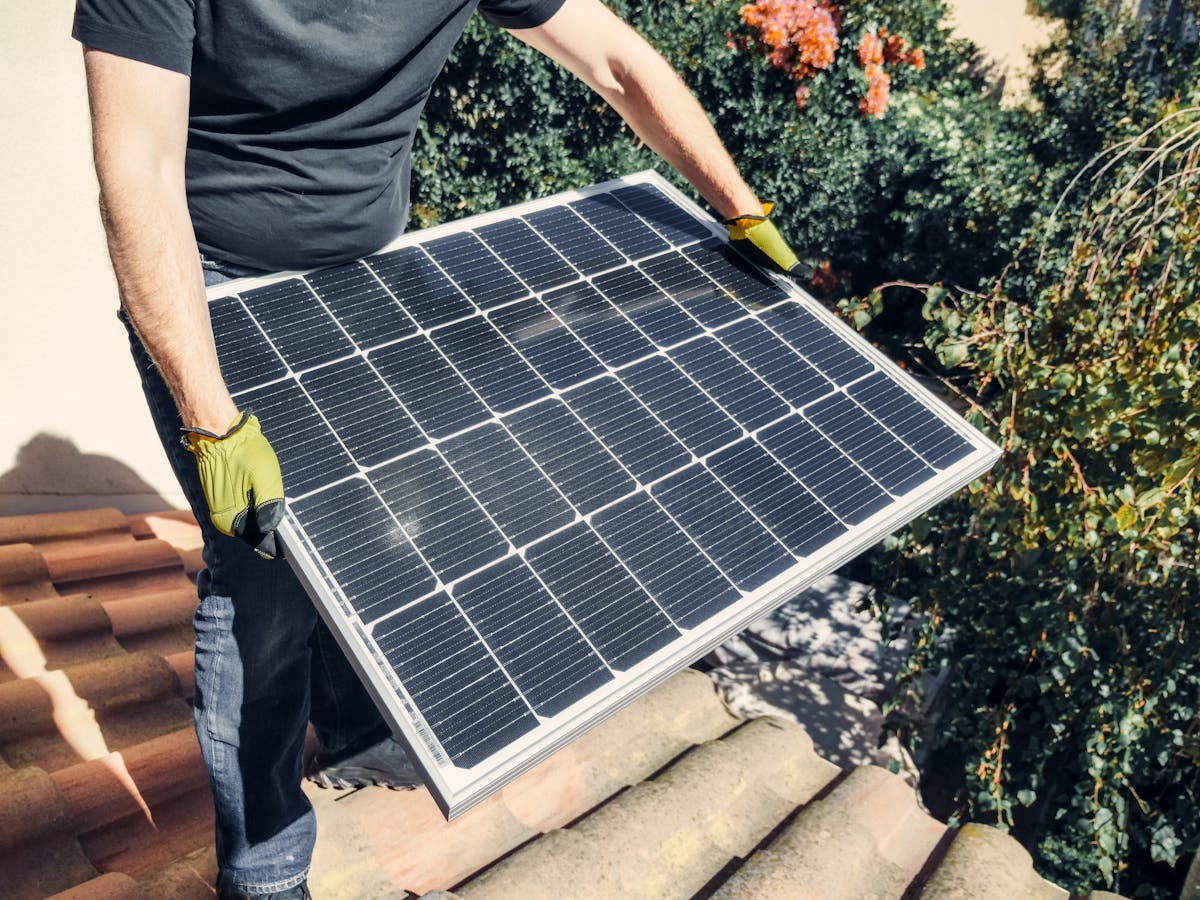
Doncaster is quietly one of the strongest solar towns in the North. The council has committed to becoming carbon neutral by 2040 — a full decade ahead of the national target — and the borough already ranks in the UK's top ten for renewable energy installations, with more than 7,000 homes and nearly 200 businesses generating their own electricity. For DN-postcode homeowners, that means going solar puts you in good company, and at just 18 miles from our Hemsworth base, we can usually survey your roof the same week you get in touch.
This guide covers what solar panels cost in Doncaster in 2026, how much a system generates on the borough's flat terrain, the planning rules that apply, and how the local grid and council policy affect your installation.
Flat Terrain, Consistent Yields
Doncaster sits on the low, level land where South Yorkshire meets the Humberhead Levels. That flatness matters for solar: with few hills to cast shadows, roofs across Bessacarr, Cantley, Armthorpe, Bawtry, and Tickhill enjoy open southern horizons and consistent generation through the year. Doncaster records roughly 1,530 sunshine hours annually — comfortably above the UK average — and the combination of good light and minimal shading makes DN one of the most predictable solar markets we work in. Our solar panel installation service covers the full DN postcode area, and our solar panels in Doncaster page details the local pricing and case studies behind these installs.
Is Solar Right for Your Doncaster Home?
Solar works best on roofs facing within 90 degrees of south — south-east through south-west — with minimal shading between 10am and 3pm. Doncaster's mix of inter-war semis, modern estates in Bessacarr and Cantley, and rural properties toward Bawtry and Finningley means most homes have at least one suitable roof plane. Terraced streets in the town centre often have south- or south-west-facing rear roofs that carry panels discreetly. Flat-roofed extensions and outbuildings can take tilt-framed arrays too, though these add a little to the installation cost. A detailed survey — in person or via high-resolution satellite imagery — is the only way to confirm your specific roof's suitability and expected yield.
How Much Do Solar Panels Cost in Doncaster in 2026?
With 0% VAT on domestic solar, Doncaster systems come in a range of sizes: a 3kW (8-panel) array, a 4kW (10-panel) system — the most popular choice for a DN semi — a 5kW (13-panel) system, and 6kW+ systems for larger detached homes in Bessacarr or Bawtry. Every installation is quoted individually — request a free, no-obligation quote.
In Doncaster, a solar system is a modest slice of a typical property value — and one of the few home improvements that generates income. For the detail on why these prices carry no VAT, read our explainer on solar panel grants and 0% VAT.
How Much Will a Doncaster System Generate?
At roughly 53.5°N with flat terrain, a south-facing Doncaster roof performs strongly: a 3kW system generates around 2,500–2,800 kWh a year, a 4kW system 3,400–3,800 kWh, a 5kW system 4,200–4,700 kWh, and a 6kW system 5,000–5,600 kWh, with typical payback periods of seven to nine years. Every installation is quoted individually — request a free, no-obligation quote.
Doncaster is served by Northern Powergrid as the local distribution network operator, and grid connections for domestic systems up to 3.68kW export are straightforward. Larger arrays require a simple notification, which we handle on your behalf.
Planning Permission in Doncaster
Almost all Doncaster solar installations are covered by Permitted Development Rights and need no planning application. Conservation areas exist in the town centre, Bawtry, and Tickhill, where visible panels may require consent — but rear-roof installations are typically permitted. Your surveyor will confirm your property's status before any work is booked. Because Doncaster is in the top 10 nationally for renewable installs, DN planning officers are well used to domestic solar applications.
Doncaster's Renewable Track Record
Doncaster's Environment and Sustainability Strategy 2020–2030 targets an 85% emissions cut by 2030 on the way to carbon neutrality by 2040. The borough already produces significant renewable electricity from onshore wind, and St Leger Homes is running a £24m programme to bring 20,000 council homes up to EPC C. For owner-occupiers, ECO4 can support solar and efficiency upgrades on qualifying EPC D-or-below properties.
For the same detail across South Yorkshire, see our Barnsley solar panel page.
Down the road we do the same work in the Steel City; see our Sheffield solar installations page for that side of things.
Why Choose a Local Doncaster Installer?
Proximity matters. At 18 miles from our base, we offer same-week surveys, fast aftercare, and pricing that reflects genuine local logistics rather than a national call-centre markup. Premier Electrical Renewables is NICEIC-approved and MCS-certified. To see full local pricing, case studies, and area-specific information, visit our Solar Panels Doncaster page. You can also check every town we serve on our areas we cover page and browse more town guides on our local solar guides hub.
Request a free survey and we'll give you an honest assessment of your Doncaster roof's solar potential — no pressure, no obligation.