
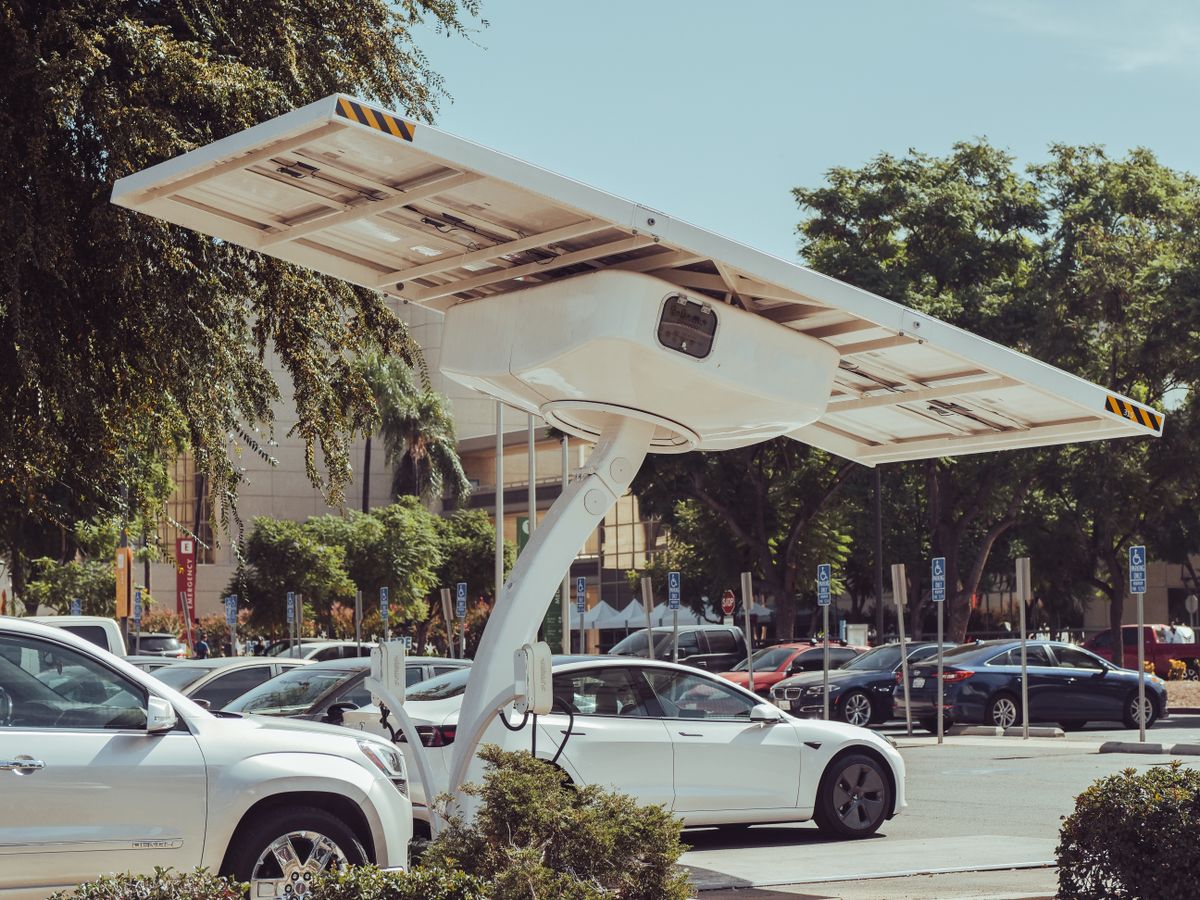
Sheffield's steep, south-facing hillsides make it one of the strongest solar cities in the North of England, and that same abundance of daytime generation is exactly what turns a home battery from a nice-to-have into a genuinely profitable upgrade. With roughly 1,360 sunshine hours a year across the S postcodes and a solar array that regularly overshoots daytime demand, the question for most Sheffield homeowners is no longer whether to add storage, but how large a battery to fit.
Ready to move from research to a fixed quote? Our our Sheffield EV charger installation service page covers the survey, installation process and aftercare for the area.
This guide explains how battery storage works in a Sheffield home in 2026, what it costs, how much it saves, and why the combination of hillside solar and smart tariffs makes the numbers stack up. If you already have panels or are planning them, adding a battery is the single biggest lever you have on your electricity bill.
Why Battery Storage Makes Sense in Sheffield
A typical solar-only home in Sheffield uses only about 35% of what its panels generate — the rest is exported for a few pence per unit while the household later buys electricity back at four to five times the price in the evening. A battery captures that surplus. In the Ecclesall, Dore and Fulwood areas, where large detached properties on the S10 and S11 hillsides often carry 5kW+ arrays with unshaded southern aspects, the daily surplus is substantial, and a 10kWh battery routinely lifts self-consumption above 80%.
Sheffield City Council declared a climate emergency in 2019 and has committed to a citywide net-zero target of 2030, one of the most ambitious of any UK core city, backed by a Warm Homes programme and ECO4 funding for eligible households. That policy backdrop keeps grid-support and retrofit schemes alive locally, and Northern Powergrid — the Distribution Network Operator (DNO) for the whole of Sheffield — has simplified its G98 and G99 notification process for domestic storage, so a standard battery addition rarely causes connection headaches. If you want the full picture on capacity, chemistry and installation, our battery storage service page walks through the options.
What Battery Storage Costs in Sheffield in 2026
Battery prices have fallen sharply and now sit at a level where payback is comfortably inside the warranty period. Storage is available in a range of capacities to suit your home — from an entry 5 kWh battery, through a popular 9.5–10 kWh mid-size, to a 13.5 kWh Powerwall-class unit or a 15–20 kWh whole-home system for EV households. Because storage retrofitted alongside or after solar qualifies for 0% VAT, there is no VAT to add. Every installation is quoted individually — request a free, no-obligation quote.
For a fuller cost breakdown and how storage pays back in the S postcodes specifically, see our detailed Battery Storage Sheffield page, which includes local case studies and payback modelling for hillside homes.
The Real Money-Maker: Smart Tariffs
The biggest single reason Sheffield battery owners see faster payback than the raw solar surplus alone would suggest is tariff arbitrage. On a time-of-use tariff such as Octopus Go or Intelligent Octopus, off-peak overnight electricity costs around 7p/kWh against a day rate near 25p. Even in December, when Sheffield's panels produce little, you can charge the battery overnight at the cheap rate and run the house on it through the expensive evening peak. We explain exactly how to combine solar export, smart charging and battery cycling in our 2026 battery storage and smart tariff guide — it is the difference between a 9-year and a 6-year payback.
Which Sheffield Homes Benefit Most
Storage suits almost every Sheffield property, but the returns are strongest for: larger detached and semi-detached homes in Dore, Totley, Bradway and Ecclesall with 4kW+ arrays; 1930s and post-war semis in Hillsborough, Crookes and Walkley with generous roofs and steady evening demand; and any household with an EV or heat pump, where a larger 13.5kWh+ battery shifts most consumption to cheap overnight units. Terraced homes in Nether Edge and Meersbrook with smaller arrays still benefit from a 5kWh unit that eliminates evening peak buying.
Sheffield's characteristic hillside orientation means many homes have one strongly performing roof plane and shading challenges on another; a well-specified battery evens out that lumpy generation profile so you keep the value of every unit your panels make. That is why a battery is often the smartest second step for a home that already has battery storage in Sheffield on its wishlist after going solar.
Getting Started
Every installation begins with a free, no-obligation survey where we assess your roof, existing solar (if any), consumer unit, current usage pattern and the best battery size for your household — there is no point paying for capacity you will never cycle. We are NICEIC approved and a Tesla Certified Installer, and we handle the Northern Powergrid notification for you. To see the full list of S postcodes and surrounding towns we cover, visit our areas we cover page, and browse more town-by-town advice on our local guides hub.
If you would like a tailored quote for a battery in Sheffield — with or without solar — book your free survey and we will model the exact saving for your home and tariff.